
The Year I Gave Up on Word Problems: What It Taught Me About Learning, ADHD, and Student Success
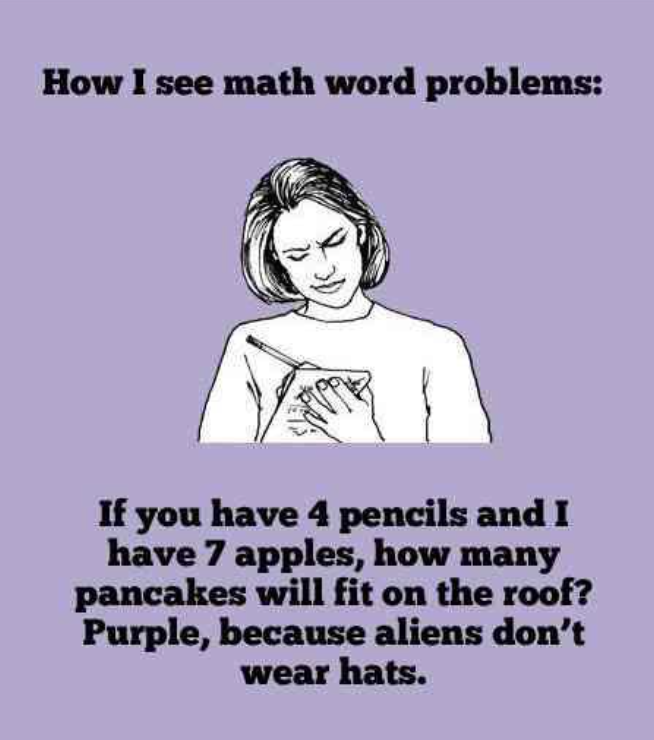
In seventh grade, I made a decision that felt completely logical at the time.
I stopped doing the word problems.
Not all of them. Just the last two on every homework assignment.
Every night, I would work my way through the page, solve problem after problem, and by the time I reached the end, I had also reached the end of my attention span.
The final two word problems felt impossible—not because I couldn’t do the math, but because I was mentally done.
So I made a deal with myself.
Eighteen out of twenty problems was good enough.
And honestly? It worked for a while.
Before students were separated into different math tracks, I managed to get by on natural ability and pattern recognition. I could memorize procedures. I could follow examples. I could usually figure out the answer.
But Algebra asked something different of me.
Suddenly, the word problems weren’t optional.
The entire class felt like one giant word problem.
🧰 The Hidden Skills Behind Word Problems
As an adult, and especially as an educator, I now understand that word problems aren’t just testing math skills.
They’re testing:
Reading comprehension
Working memory
Attention
Planning
Organization
Executive functioning
Persistence
In other words, they require a whole collection of skills that many bright students struggle with every day.
When I think back to my seventh-grade self, I don’t think I lacked intelligence.
I think I lacked the mental energy to keep switching between reading, interpreting, organizing information, and solving equations after an entire day of school.
Many students experience the same thing today.
🦥 When “Lazy” Isn’t Actually Lazy
Over the years, I’ve worked with students who were labeled as lazy, careless, or unmotivated.
But when we looked more closely, we discovered something else.
The student wasn’t refusing to work.
The student was overwhelmed.
There is a huge difference.
Sometimes a child can solve every computation problem correctly but freezes when asked to read and interpret a word problem.
Sometimes a student understands the lesson perfectly during class but struggles to start independent work at home.
Sometimes a child spends so much mental energy managing attention, anxiety, or executive functioning challenges that they have very little left for the actual assignment.
From the outside, it can look like a motivation problem.
Often, it’s a support problem.
💭 What I Wish Someone Had Told Me
If I could go back and talk to my seventh-grade self, I wouldn’t tell her to work harder.
I’d tell her to get curious.
I’d ask:
Why do the word problems feel harder?
What part of the task is causing frustration?
Are you struggling with the math itself, or everything surrounding the math?
What supports would make this easier?
Those questions have guided much of my work as a tutor.
Because the truth is that students don’t just need more practice.
They need the right kind of support.
📚 For Parents Watching Their Child Struggle
If your child seems capable but consistently avoids certain assignments, there may be more going on than simple procrastination.
Pay attention to patterns.
Do they avoid reading-heavy assignments?
Do they become frustrated when directions are lengthy?
Do they start strong but run out of steam?
Do they understand concepts verbally but struggle to demonstrate them independently?
These clues can help uncover whether a student needs additional support with executive functioning, reading comprehension, attention, or confidence.
Talk to their teachers, ask what strategies work in class and which ones do not.
👩🏫 For Teachers Feeling Frustrated
I know how easy it is to look at incomplete work and wonder why a student just won’t finish.
I’ve been there.
But I’ve also been the student leaving the last two problems blank.
Sometimes what looks like defiance is actually exhaustion.
Sometimes what looks like carelessness is cognitive overload.
And sometimes the student who needs the most support is also the student trying the hardest.
Try new techniques with them: circle the numbers, underline the question. Break out the glitter scented highlighters if that’s what it takes.
🧠 The Real Lesson
The biggest lesson I learned from my seventh-grade word problem rebellion had nothing to do with math.
It taught me that success in school isn’t just about intelligence.
It’s about having the tools, strategies, support, and confidence to keep going when learning gets difficult.
Today, when I work with students who are struggling, I try to remember that kid sitting at the kitchen table staring at the last two problems on the page.
Because every student has their own version of those last two problems.
And sometimes what they need most isn’t more pressure.
