Simple Tools to Support Kids with Dyslexia, ADHD, and Anxiety: A Bookmark Strategy Parents and Teachers Can Use
Bookmarks and In Person Support
As tired parents and teachers of neurodivergent kids, we often find ourselves asking the same question: How can I make learning less overwhelming and more effective for my child or students? Let me help with some simple tools to support kids with dyslexia, ADHD, and anxiety at home AND at school.
The truth is, the problem is rarely what we teach—it’s how we teach it. For children with dyslexia, ADHD, and anxiety, the demands of school can feel exhausting. Processing speed, working memory, and executive functioning skills often require extra energy. Research in the Science of Reading shows us that when students have structured, evidence-based supports, they free up valuable brain power to focus on comprehension and mastery (National Reading Panel, 2000; Seidenberg, 2017).
That’s why I created a simple bookmark tool with one of my students—and today, I want to share it with you. Small tools like this can give students quick references, reduce stress, and help them feel more independent while learning.
Bb Dd with Visuals
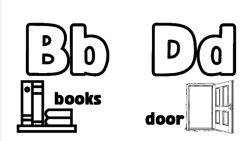
Many children confuse b and d. While some teachers use the “bed” rule, I’ve found that doesn’t always stick. On my bookmark, I added a book next to the “b” and a door next to the “d.” For some students, this works instantly. Others need to reference the visual every time. Either way, this quick reminder takes one more stressor off their plate so they can focus on writing.
Long Vowel Sounds
Did you know there are six different ways to spell the long E sound in English? Multiply that across all the vowels, and you see how overwhelming spelling can feel for kids with dyslexia, ADHD, or executive functioning challenges.
Here’s a quick breakdown:
- a: a, a-e, ai, ay
- e: e, e-e, ea, ee, ie, y
- i: i, i-e, ie, igh, y
- o: o, o-e, oa, oe, ow
- u: u, u-e, ue, ew
This chart on the bookmark acts as a memory booster, reducing cognitive load and letting students use their energy for writing, not guessing.
Question Words
I included a question mark on the bookmark with all the “wh” words listed in the curve, and “how” in the dot at the bottom. Separating “how” and “who” visually gives kids a fast reference for writing questions.
There, Their, and They’re
Homophones are a huge challenge for many students. On the bookmark:
- There has an arrow drawn from the “r” (to show direction).
- Their has a small stick figure (to remind students it’s used for groups of people).
- They’re has a tiny “a” in the apostrophe (to remind students it stands for they are).
These quick visuals help students distinguish tricky words without halting their writing flow.
CHOPS Editing Strategy
At the bottom, I added the acronym CHOPS—a checklist for editing:
- C – Capitalization (start of sentences, names, etc.)
- H – Handwriting (is it neat enough for the audience?)
- O – Order & Organization (are words in the right order and on the line?)
- P – Punctuation (periods, question marks, commas, etc.)
- S – Spelling (check at the end with guided support).
I approach spelling collaboratively: instead of red pen corrections, I’ll say, “I see three things to fix—can you find them?” This makes editing feel like a game. Students then cross out errors and rewrite words correctly, building muscle memory and confidence.
This method is supported by Orton-Gillingham (OG) practices, which emphasize individualized, multisensory repetition to reinforce correct patterns (Birsh & Carreker, 2018).
Individualization on the Back
On the back of the bookmark, I created a syllable sort with vowel sounds and example words (like snow and out) with this student. With other students, I have listed other heart words they have a hard time memorizing, number words, or even leave it blank to use as a tracking tool while reading. Having this tool nearby allows students to reference tricky sounds quickly, keeping reading and writing flowing. Such an incredibly easy way to implement scaffolding for each student you work with!
Bonus: Book Recommendation 📚
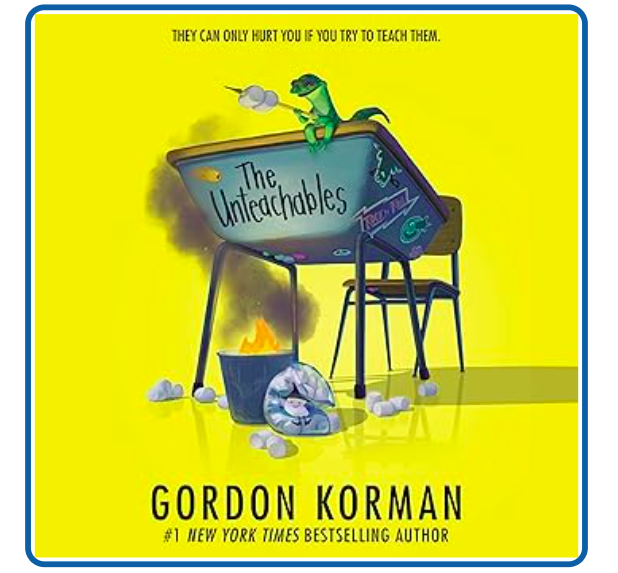
If you want to build empathy and connection, I highly recommend The Unteachables by Gordon Korman. This novel—told from multiple perspectives, including a burned out teacher—offers humor, heart, and a powerful reminder of how misunderstood kids can thrive with the right support.
Why This Matters
For kids with dyslexia, ADHD, and anxiety, familiar tools reduce cognitive load and stress. Instead of wasting energy trying to recall rules, they can focus on comprehension, fluency, and confidence. This is backed by cognitive load theory (Sweller, 1988), which shows that reducing unnecessary demands on working memory improves learning outcomes.
The bookmark tool is simple, but it reflects a deeper truth: students thrive when we meet them where they are and give them strategies that work for their brains.
🎉 Join Me in Person 🎉
📅 On September 28th, I’m hosting Top 3 Tips to Help Your Neurodivergent Child with Dyslexia, ADHD, and Anxiety at The Family Room Coffee Shop.
💡 You’ll get to see my bookmark tool in person—and take home strategies you can start using immediately with your child or students.
And since September 17th is my birthday, my wish is for you to come celebrate by joining me on the 28th. 🎂💛
If you can’t make it, send me your email and I’ll share the replay.
Together, let’s give our kids the tools to maximize their potential.